By Donglei Mao via Asia Bio Inc
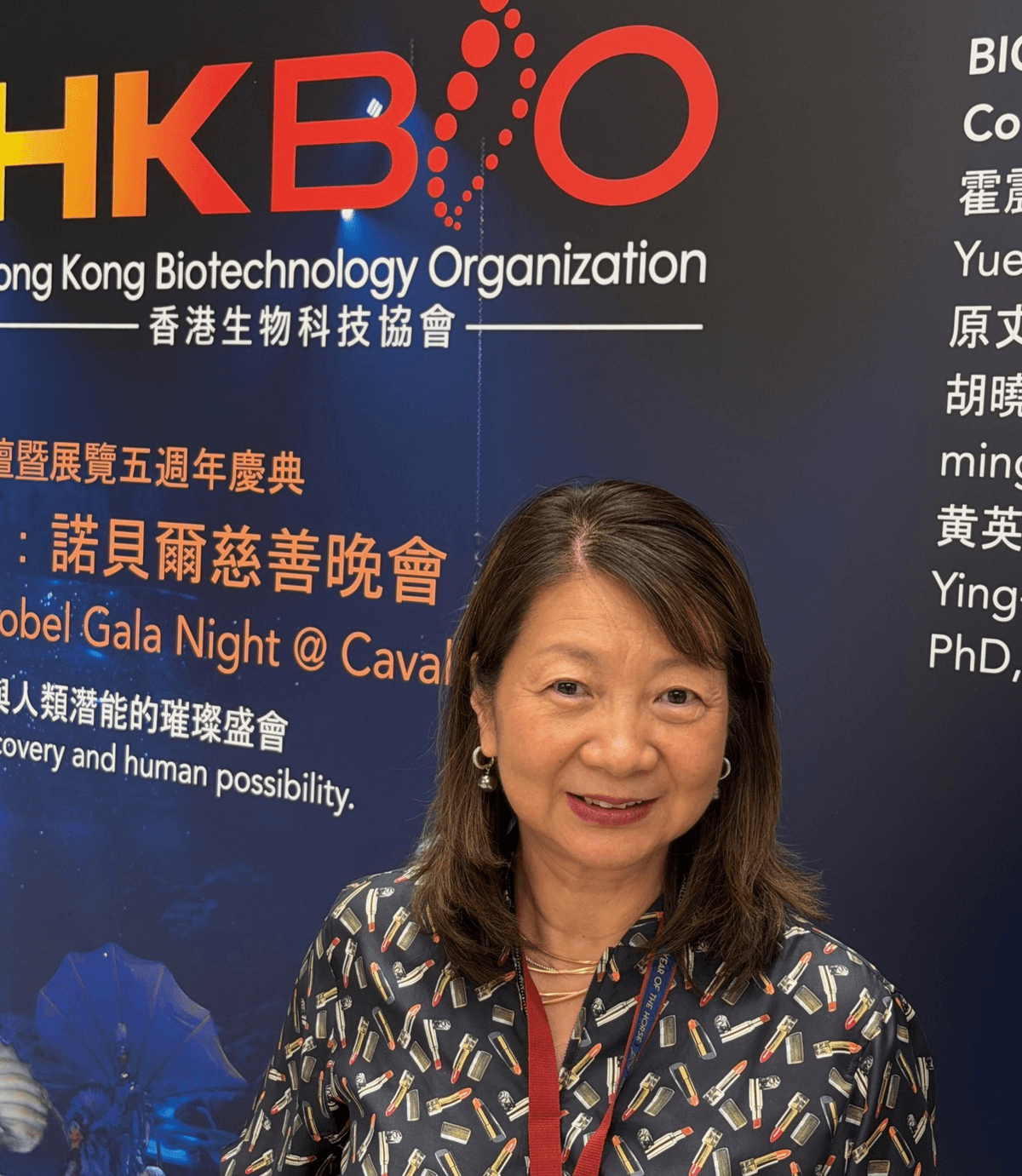
AFCR CEO Ba builds bridges in oncology ecosystem
Sujuan Ba is a bridge builder in oncology. She and the Asian Fund for Cancer Research (AFCR), of which she is Founder and CEO, build bridges between Asia and the West, connecting Chinese cancer researchers to the global frontier of clinical research. She and the AFCR forge connections among universities, venture capital (VC), researchers, entrepreneurs and biotech companies.
AFCR's role is that of "convener, connector, and catalyst", Ba explained. "This is precisely where AFCR's unique value lies. It is not a government agency, not a university, not a venture capital firm, and not a biotechnology company. Its value lies precisely in connecting the gaps between these institutions. As an independent nonprofit organization, AFCR can convene stakeholders who would not normally sit at the same table; it can identify promising science before it attracts traditional investment; it can help bridge the translational funding gap; it can connect researchers with entrepreneurial and investment expertise; it can promote international cooperation; and it can always keep patient benefit at the center of the innovation journey.”
Throughout her career, Ba has received several accolades.
In 2025, she was listed among OncoDaily's "100 Most Influential CEOs in Global Oncology."
At the BIOHK conference in Hong Kong in September 2023, Peter Nobel, Chairman of the Nobel Sustainability Trust, presented Ba with the inaugural Global Cancer Research Advocate Leadership Award. In her acceptance speech, Ba said: "Cancer patients, survivors, and supporters are the fuel and motivation behind all my passion."
Ba’s role as a bridge builder between Asia and the West originated from her birth in China and her move to the US where she has lived ever since.
From Kaifeng to America
Ba was born in Kaifeng, a historic city in Henan province, China, in 1962. Kaifeng was the capital of China during the Northern Song dynasty from 960 to 1127.
During the 1980s, Ba graduated with a bachelor’s degree in radiochemistry from Peking University. She subsequently studied for a master’s degree in inorganic chemistry at Beijing Institute of Technology, but left without finishing the degree to go to US to pursue a doctorate in chemistry at the University of Pennsylvania in 1986.
During the five years of her doctorate, she realized: "I don't belong in the laboratory. I am someone who is curious about the world, culture and loves constantly challenging myself. I want to see and learn everything. More importantly, I like working with people."
In 1991, after graduating from University of Pennsylvania, Ba joined ARCO Chemical Company, a major US manufacturer of chemical products. In 1999 after a brief stint at a technology consulting firm, Ba she joined the National Foundation for Cancer Research (NFCR) as Chief Scientific Officer. NFCR was co-founded in 1973 by Albert Szent-Györgyi, winner of the 1937 Nobel Prize in Medicine, and Franklin C. Salisbury Sr., an American lawyer and entrepreneur. It was one of the earliest US charitable organizations dedicated to cancer research.
After arriving at NFCR, Ba noticed a problem. Like most charitable funding organizations, NFCR simply distributed research grants to individual researchers at various universities and research hospitals. She believed the foundation should play the role of connector in bringing together experts from different fields and different regions.
AFCR
In the early 2000s, Ba attended international academic conferences and noticed Western scientists wanted to cooperate with China and Chinese scientists wanted to connect with the world, but there was no platform to connect them systematically.
In reaction, Ba established the AFCR in Hong Kong in 2005. Its mission is to focus on cancers with high incidence in Asian populations, conduct scientific research, promote international cooperation and popularize public cancer education.
Around 2014, the AFCR, together with NFCR, as the early funders, brought together researchers from the US and China to explore the establishment of GBM AGILE (Glioblastoma Adaptive Global Innovative Learning which is a revolution in clinical trial design: an international, seamless Phase II/III trial system that uses an adaptive platform to evaluate multiple promising drugs for glioblastoma at the same time.
Instead of starting a traditional, multi-year trial from scratch for every new drug, GBM AGILE continuously matches patients to treatments based on their specific tumor biomarker profiles—enabling effective treatments to be identified and approved much faster while inefficient ones are dropped early.
Subsequently, GBM AGILE was implemented in more than 100 sites across the US, Australia, Europe and Canada. China, however, did not join, because its National Medical Products Administration (NMPA) at the time did not accept a master protocol held by an independent third-party organization.
During the mid-2000s, when Ba first walked into Chinese hospitals, she faced an environment with virtually no investigator-initiated trial (IIT) regulatory framework and virtually no precedent for Chinese researchers leading global trials. AFCR’s efforts to promote cooperation between China and other countries on IITs came many years before an IIT regulatory framework took shape in China.
In cell and gene therapy, the number of registered IITs in China soared elevenfold between 2015 and 2023, and was assessed by Nature magazine as an important driver of the rise of China's biomedical competitiveness. This exponential growth in IITs marked the transformation of Chinese clinical researchers from followers to co-runners and even leaders.
Overcoming the Valley of Death
In 2019, Ba, with her business partner and husband Franklin Salisbury, Jr., and Charles Weatherspoon, a long-time cancer advocate, founded the AIM-HI Translational Research Fund, a nonprofit impact investment organization dedicated to helping cancer research cross the critical translational stage from laboratory to clinic and market.
Behind this decision was the cruel reality that between laboratory discovery and clinical validation lies a wilderness known as the "Valley of Death." This stage is extremely underfunded because the risk is too high, so most of the traditional investors dare not touch it.
AIM-HI, headquartered in the US, aimed to fill this gap. Incubated in NFCR, it pioneered a new funding paradigm. AIM-HI's role is not merely to find promising companies, invest in them, and seek financial returns. AIM-HI provides a comprehensive access platform for promising oncology projects, helping them reach the clinic faster through entrepreneurial coaching, scientific and business consulting, and global connections.
Regardless of whether they receive AIM-HI investment, every oncology startup which participates in the AIM-HI platform receives feedback and suggestions for development.
"Our goal is not only to find companies worth investing in, but also to help cultivate better oncology innovative companies and more mature entrepreneurs. Even if AIM-HI ultimately does not become an investor in that company, we hope the company can learn and benefit from participating in the AIM-HI platform," Ba explained.
"AIM-HI is more than a source of seed capital. It offers participating companies review feedback, coaching, advice, and connections; the level of continuing support varies by company.," Ba said.
As of 2025, AIM-HI has made seed investments in more than 20 early-stage oncology companies, after over 500 early-stage oncology firms underwent AIM-HI’s rigorous review process.
Making Hong Kong a biotech hub
Ba has noticed obstacles to Hong Kong’s aspiration to be a leading biotech hub several years ago. The city has world-class universities, an international financial centre and a unique role as a connector between mainland China with the world, but these advantages did not automatically translate into a biomedical innovation ecosystem. The bottleneck lies in inadequate connections among discovery, translation, capital, clinical development and patients.
At the BIOHK conference in Hong Kong on December 15, 2022, AFCR organized a forum, "Unlocking Hong Kong's potential as a biomedical innovation hub", chaired by Ba. The forum identified a couple of gaps in Hong Kong’s biotech sector.
First, researchers have not been active in attending international conferences, and scientists lack enough knowledge to commercialize intellectual property (IP).
Second, angel investment in long-term biotechnology projects is insufficient, and there is a lack of early-stage investors who understand biotechnology.
Out of the forum’s findings came a solution of connecting discovery, IP, entrepreneurs, teams, capital, companies, clinical development, drugs and patients.
Ba was heartened by Hong Kong's First Five-Year Plan which was released in September 16, 2026 and placed importance on biomedical innovation, translation, and commercialization. Ba welcomed the plan’s emphasis on biomedical innovation and saw areas of alignment with themes AFCR had raised in earlier discussions. The plan’s combination of innovation, translation and commercialization confirmed AFCR’s belief that strengthening connections among research, translation, capital, and patients is key to realizing Hong Kong's biomedical potential.
“I have been fortunate to receive help and encouragement at important moments in my own life. I want to pass that on—by helping promising scientists and entrepreneurs move their work forward, and by making sure the benefits of cancer research reach patients wherever they live, especially those who are too often left behind,” Ba said.
